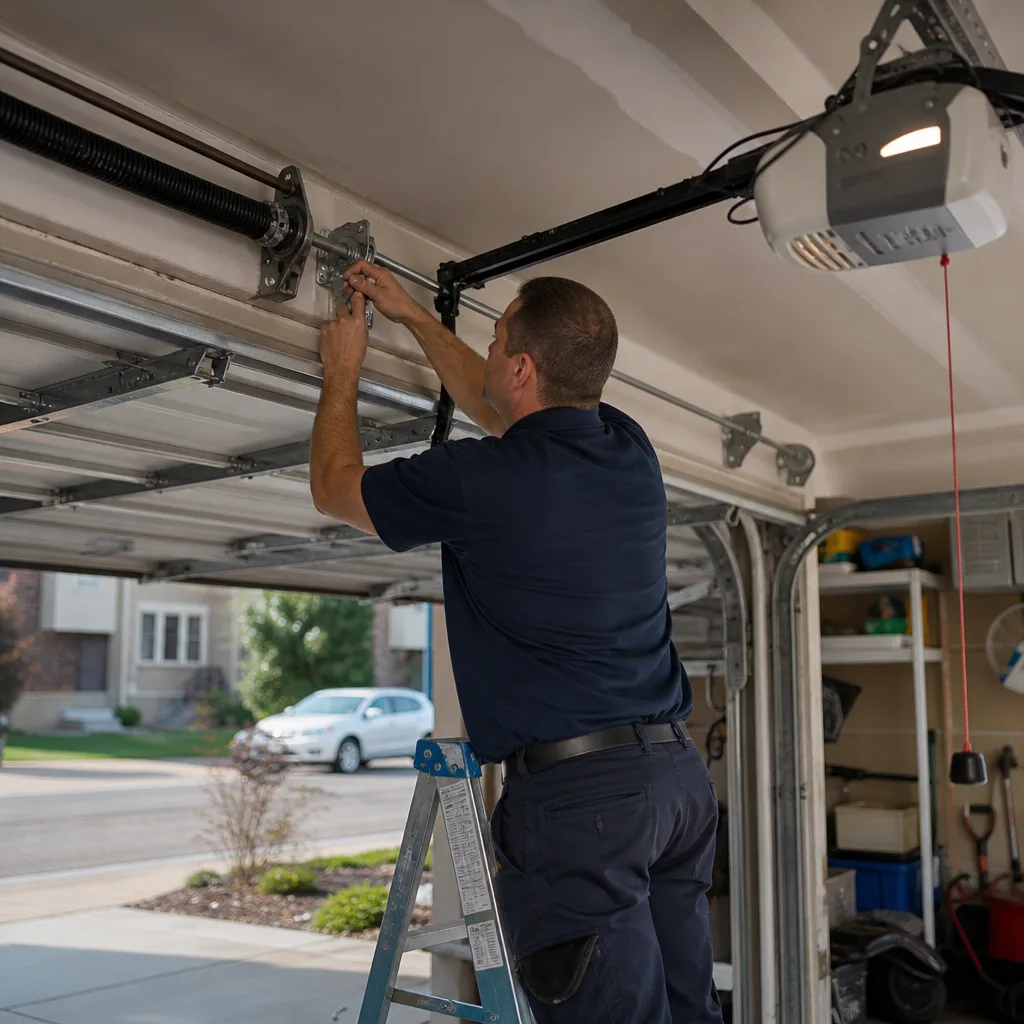
Last updated November 21, 2026
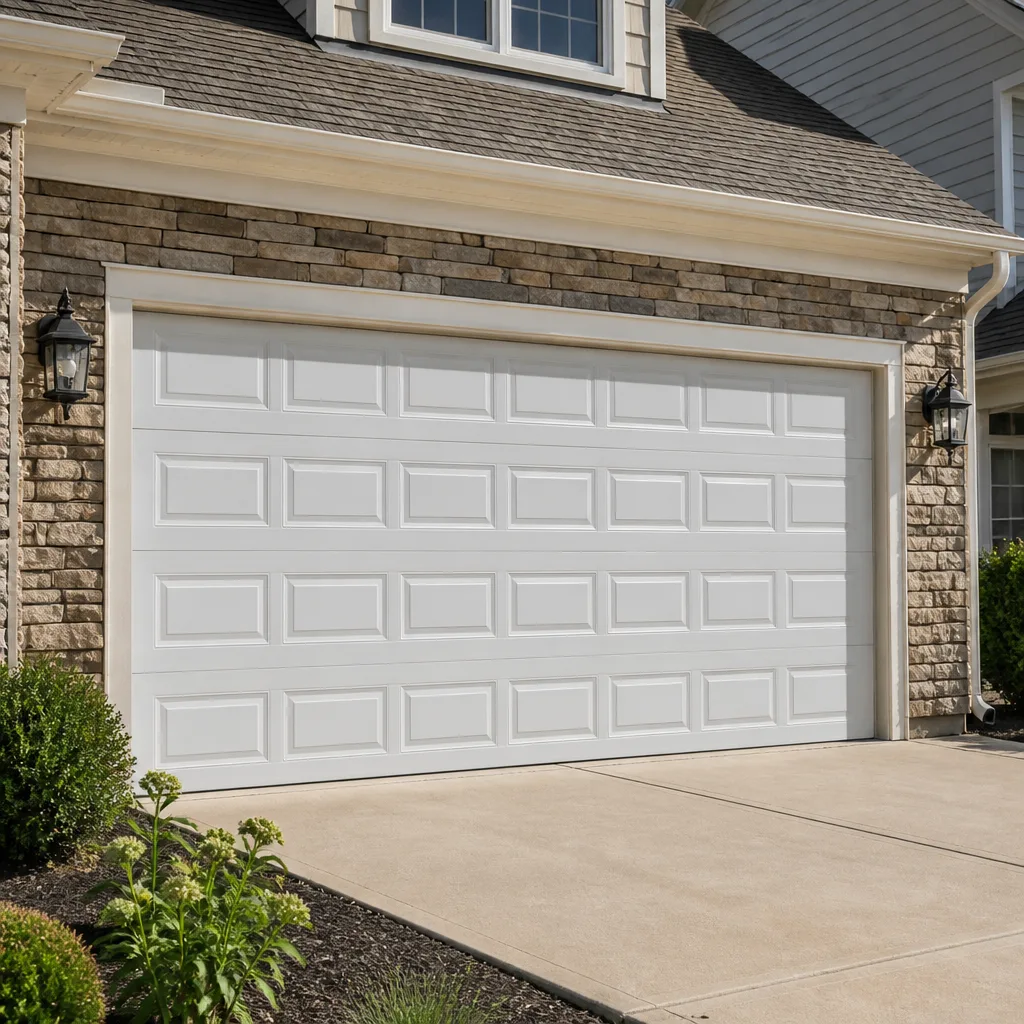 Raised-panel steel
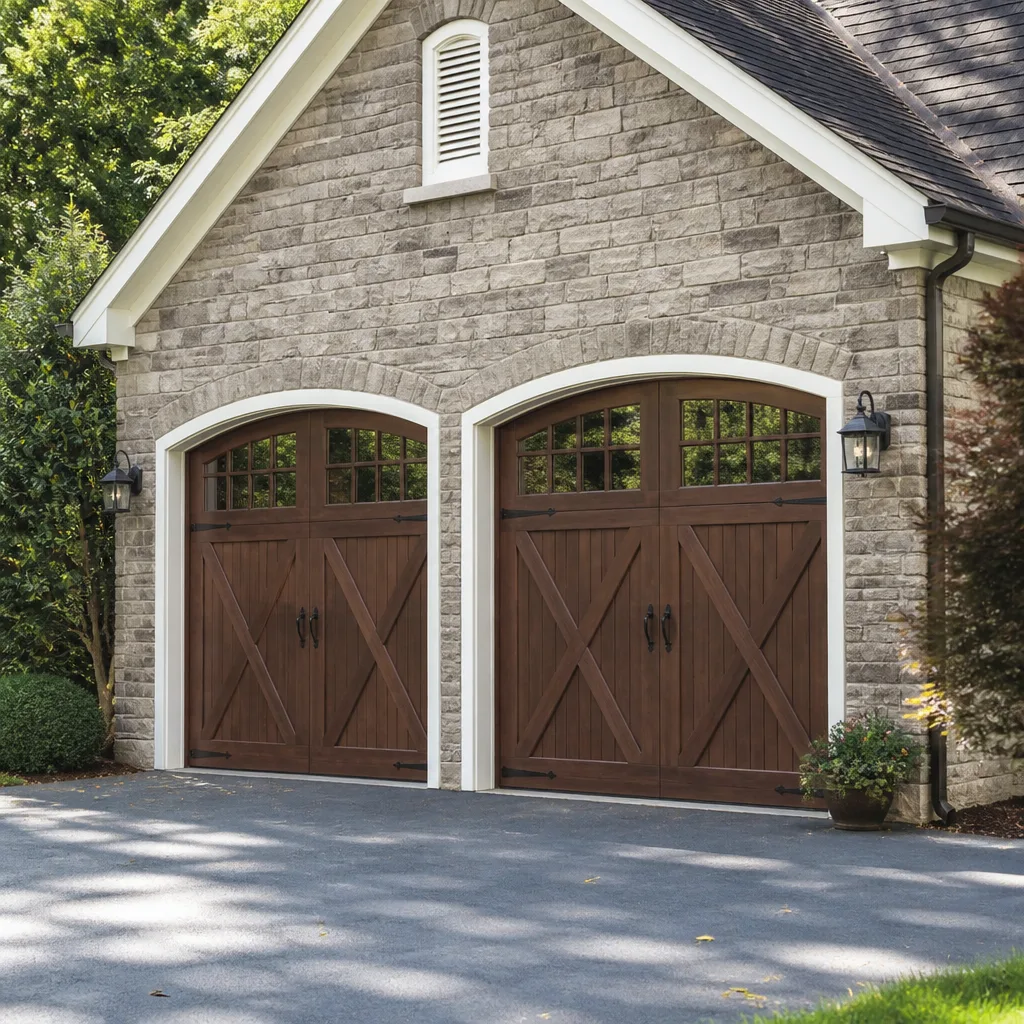 Carriage house
 Modern flush
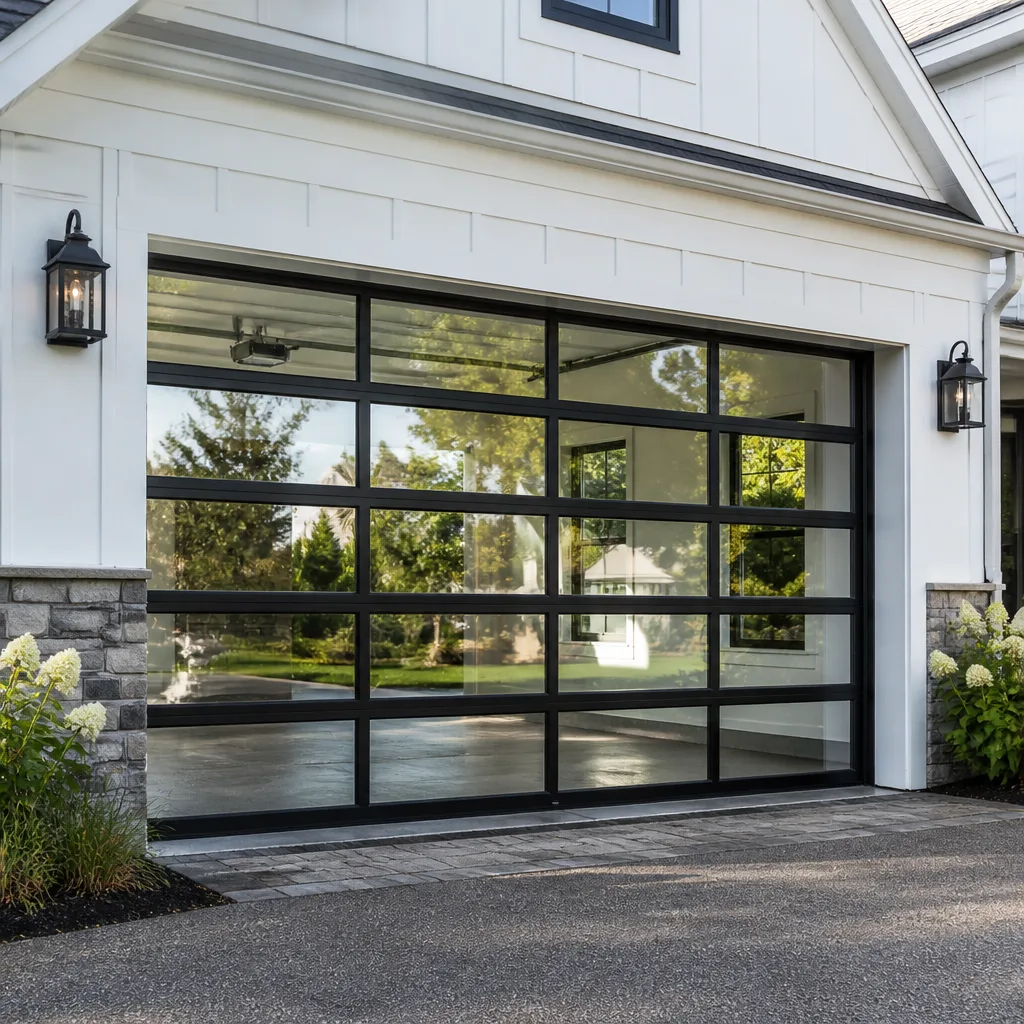 Full-view glass
 LiftMaster openers
 Chamberlain openers
Full 25-point door and opener safety check with every visit - springs, cables, rollers, tracks, and your LiftMaster or Chamberlain opener included
You get a price before we start. It does not change when the pro arrives.
Get your free estimateHow to Hire a Garage Door Contractor in Heather Gardens: A Step-by-Step Guide
Any contractor can order a door. The question is whether they’re sizing the torsion spring to your door’s exact weight and cycle rating, or just installing whatever ships in the box. That difference is invisible on a one-line quote, and it’s the reason two garage doors that look identical can last ten years or two. Here in Heather Gardens, where we’ve watched plenty of these jobs and talked plenty of homeowners through them, the hires that go well are almost always the ones where the homeowner asked the right questions before signing. This guide gives you those questions, the verification steps, and the red flags that separate a real specialist from a generalist with a parts account.
Quick Answer
To hire a garage door contractor in Heather Gardens, verify the contractor is registered with the Colorado Secretary of State as a business, confirm the technician who arrives is qualified to work on your specific door and opener brand, insist on a written scope that names the spring type and wire size, and compare quotes line by line rather than by bottom-line total. Ask what spring goes in, what cycle rating it carries, and who programs the opener to the door’s weight. A contractor who can answer those three things precisely is a specialist. One who can’t is guessing.
Have a door that’s stuck, loud, or out of balance right now? Call us at (833) 958-8653 for a free estimate. We work on garage doors and nothing else.
Styles & brands we work with
- Raised-panel steel
- Carriage house
- Modern flush
- Full-view glass
- LiftMaster openers
- Chamberlain openers
Table of Contents
- Why a Garage Door Specialist Isn’t the Same as a Handyman
- The Three Technical Questions That Reveal a Generalist
- What Colorado Licensing Actually Covers (And How to Verify)
- Reading a Quote: Red Flags and Missing Line Items
- Why Three Quotes Often Don’t Compare (And How to Fix It)
- How to Verify OEM Parts for Your Specific Brand
- What Heather Gardens Climate and Housing Do to Your Door
- The Step-by-Step Hiring Process
Why a Garage Door Specialist Isn’t the Same as a Handyman
Most of the work a garage door needs looks simple from the outside. Replace a spring. Adjust a track. Reconnect a cable. But every one of those jobs depends on numbers you can’t eyeball. Torsion springs are rated by wire diameter, inside diameter, length, and cycle life. Change one of those and you change how the weight of the door is held, how long the assembly lasts, and how hard the opener has to work to lift the door.
A generalist typically learns the door by trial and error. They arrive, take one look, order the closest spring, install it, run the opener, and call it a day. It works, briefly. Months later the homeowner notices the door slams hard, the opener strains, or the cable starts walking off the drum. Those are symptoms of a spring matched by guesswork rather than calculation.
A specialist works backward from your specific door. They weigh the door or look up the door’s specification, they read the old spring’s markings (or measure the wire with a gauge), and they install a spring rated to carry that weight for the expected cycle life. This matters in Heather Gardens because door weight varies more than people assume. A single-car door, a double-car door, and a door with a reinforced bottom section all need different springs. Even two doors of the same width can weigh differently depending on the insulation and the panel style.
When we’re asked to help with garage door repair, the first thing our technicians do is check what’s currently installed before they decide on a replacement. That check is the entire job. What you’re hiring a specialist for is that measurement, not the act of turning a wrench.
The other side of the specialist conversation is brand fluency. Garage door systems draw from a fairly small number of manufacturers, but most residential garages run one of a handful of openers – LiftMaster, Chamberlain, Genie, and Craftsman cover the majority. Each brand programs differently, travels differently, and fails in a different way. A tech who’s worked on the same brand dozens of times knows where to look first. We work on LiftMaster, Chamberlain, Genie, Clopay, Amarr, Wayne Dalton, Craftsman, and Raynor systems specifically, so the diagnosis usually isn’t the slow part of the visit.
The Three Technical Questions That Reveal a Generalist
You don’t need a technical background to spot a specialist. You need to ask three questions and listen carefully to the answers. If any answer comes back as “we’ll figure it out when we get there,” that’s your signal. A specialist answers these in one sentence each, without hesitation.
Question 1: What spring types and wire sizes do you work with, and how do you determine the right one?
The correct answer mentions torsion or extension, and then wire diameter in inches, cycle rating, and how they calculate the load for your door. A generalist will say “standard spring” or “whatever fits.” A specialist tells you they’ll read the old spring, weigh the door, and cross-reference. This is where spring wire diameter in the opening quote earns its place. If wire size is missing, you’re looking at a contractor who won’t be able to guarantee the door balances.
Question 2: Do you carry OEM parts for my opener brand, or generic equivalents?
OEM means Original Equipment Manufacturer – the part the maker designed for the system. A specialist carries or quickly sources OEM parts for the brands they work on, because generic gears, circuit boards, and safety sensors cause fit problems, programming problems, and callback visits. Ask plainly: “If my opener needs a gear and sprocket kit for a Chamberlain, do you have OEM, or do you substitute?” A real answer names the brand and the part.
Question 3: Who sizes the opener to the door’s weight, and what does that involve?
Roughly, an opener is rated to lift up to a certain door weight, and using one sized wrong shortens its life and sometimes voids the manufacturer’s warranty. The right answer names the door weight, the opener’s rated capacity, and describes how the travel limits and force settings get programmed to match. A generalist will skip this and set force to maximum so the door “works,” which is how openers burn out early.
Every one of those questions has a real answer. If you hear three good ones, you’re probably talking to someone with actual trade depth. If you a hear a guess, keep calling.
What Colorado Licensing Actually Covers (And How to Verify)
Colorado does not issue a statewide license that covers residential garage door installation and repair specifically. Unlike electrical or plumbing work, garage door service isn’t a licensed trade in this state, which means any handyman with a truck can legally offer it. That fact surprises a lot of Heather Gardens homeowners, and it’s the single biggest reason to verify what you can verify.
Here’s what to check, in order:
- Business registration: Search the Colorado Secretary of State’s business database for the contractor’s legal business name. A legitimate operation is registered.
- Liability and workers’ compensation: Ask for a certificate of insurance and confirm both liability coverage and workers’ comp. If someone gets hurt on your property and the contractor isn’t covered, that’s your problem. The local professional we connect you with is insured and bonded as their state requires – ask for the certificate before work starts.
- Local business licensing: Heather Gardens sits within a larger metro area where local business licenses and permit rules vary by jurisdiction. Call your city or county building department and ask if a permit is required for a garage door replacement or track modification at your address. Most cities do require a permit for structural modifications, so the answer is worth having in writing.
- References for similar work: Ask for two or three specific jobs the contractor has completed in the last year, ideally with the door brand and model. A specialist should be able to describe the work.
One note on permits. If a contractor tells you no permit is ever needed for a garage door job, ask them to put that in writing. If they’re right, you’ve lost nothing. If they’re wrong, you have documentation. The city’s building department is the authority here, not the contractor.
Reading a Quote: Red Flags and Missing Line Items
A quote that fits on a sticky note is not a quote. It’s a guess about your project. A real estimate for garage door work should have enough detail that you could hand it to a different contractor and they’d know exactly what was being done. Here’s what should be on every page.
Line items that must appear on a proper quote
- Spring type and specification: Torsion or extension, wire diameter, inside diameter, length, and cycle rating. If it just says “spring replacement,” ask them to detail it.
- Cable and drum condition: Cables and drums wear with the spring. A quote that doesn’t address them is likely to have a surprise line item later.
- Hardware grade: Hinges, rollers, and brackets come in different grades. Standard vs. heavy-duty matters for a door that cycles several times a day.
- Opener model and capacity: If the opener is being replaced or adjusted, the quote should state the model and the lifting capacity.
- Labor and disposal: What’s being removed, and what happens to it.
- Final price and estimate language: A written total, and a clear statement that no work begins until you’ve agreed to it.
Red flags to walk away from
- “We’ll quote when we get there.” That’s not a quote, that’s a blank check.
- No spring specifications listed and no willingness to add them.
- Pressure to sign before you’ve compared other estimates.
- Any mention of a “lifetime” guarantee without a written document defining what that covers.
Why Three Quotes Often Don’t Compare (And How to Fix It)
Three quotes on a garage door job usually produce three incomparable documents. One includes labor and disposal, one doesn’t. One specifies a heavy-duty cycle-rated spring, one says “spring.” One includes rebalancing the door, one leaves it out. If you line up the totals, you’re comparing apples to apple cores.
The fix is standardization. Before you request quotes, build a short checklist and send it to each contractor. Ask every one to respond point by point:
- Spring type, wire diameter, cycle rating, and included labor.
- Openers (if involved): model number, lifting capacity, and whether travel limits will be programmed to the door.
- Hardware grade for hinges, rollers, and brackets.
- Track condition and whether any is being replaced.
- Safe-T-Sensor or equivalent safety device check.
- Disposal of old parts.
- Final written price, with a statement that no work starts until it’s accepted.
When every contractor answers the same questions, the comparison becomes clear. The cheapest bid usually reveals itself as the bid that omitted the rebalance, the heavy-duty spring, or the safety sensor inspection. None of those are optional – they’re how the door works safely.
For a heavier job like a full door swap, the checklist becomes more valuable. A written scope for garage door installation should cover the door itself, the track, the spring system, and the opener. If any of those are silent, ask.
How to Verify OEM Parts for Your Specific Brand
“We use OEM parts” is easy to say. Here’s how to check whether the parts going into your door are actually OEM.
First, know your door brand. The brand is usually on a sticker on the back of the door panel, on the door’s top section, or on the opener motor housing. Write it down along with the model number if it’s visible. If your opener is a Chamberlain or a Genie, the model number will be printed on the back panel or the motor housing. That number is what gets you the right parts.
Second, ask a specialist how they source parts. A real answer names the distributor, describes the parts availability pipeline, and explains why an OEM fit matters. Generic parts often look identical but vary in tolerance – gears, sprockets, rollers, and safety sensors are the usual trouble spots. A gear with the wrong tooth profile will work for a few weeks and then strip. A safety sensor without the right housing won’t line up in the bracket.
Third, ask about turnaround. A specialist who carries parts stock in the trade (not literally in a truck, but in the supply chain they buy from) can usually complete the repair in one visit. A generalist orders the part, comes back, and sometimes orders the wrong one. That delay is the most common reason a simple repair takes two or three trips.
Fourth, ask for the part label when the work is done. When we handle garage door opener repair, we’re happy to show the homeowner the part number on the box or the component. Good contractors don’t mind being asked. Bad ones resist.
What Heather Gardens Climate and Housing Do to Your Door
Garage doors in Heather Gardens are subject to one of the tougher climates in the country, and the day-to-day effect is bigger than most homeowners realize. Front Range winters swing between warm afternoons and hard freezes overnight. Every one of those swings shrinks and expands the metal in the door, the tracks, and the springs. Over a season, that cycling loosens hardware, changes track alignment, and works the spring steel harder than it would in a stable climate.
The dry air is the other half of the story. In dry conditions, wood door panels can shrink and pull apart at the joints, and the finish on steel panels can dry out and start to crack if it isn’t maintained. Dust and grit work into the rollers and the hinges, and grease in the tracks dries out. A door in Heather Gardens is more likely to be noisy or stiff than one in a humid climate, and that’s not the door’s fault. It’s maintenance.
Housing stock matters too. Many Heather Gardens homes are single-level or the classic two-car configuration with a single wide door. Those wider doors weigh more, put more stress on the spring assembly, and benefit more from heavy-duty cycle ratings than a narrower door would. When we quote a spring for a wide door in Heather Gardens, we size the cycle rating for the weight of that specific door rather than defaulting to standard.
One thing that isn’t a factor here: salt air and coastal corrosion. We’re inland, well above sea level, and the corrosion-related failures you see on the coasts don’t apply. The problems here are freeze-thaw cycling, dry air, and dust. If a contractor tries to sell you “marine grade” anything in Heather Gardens, that’s a clue about their experience with the local climate.
The Step-by-Step Hiring Process
Here’s the sequence to follow when you’re ready to hire a garage door contractor in Heather Gardens.
- Identify the problem in plain terms. Is the door not opening, noisy, off-balance, dented, or just old? The clearer your description, the better the quote. “The door scrapes on the left side about a foot from the bottom” is a better description than “the door doesn’t work.”
- Get the door brand and model, and the opener model. Look at the labels on the door and the opener. It matters, and a specialist will ask anyway.
- Call three contractors and describe the problem. Note how specific each response is. Do they ask about the door weight, the spring, the opener, the tracks? The generalist asks what color you want.
- Send your standard checklist (from the previous section) to each contractor and ask for a written quote against it. If one refuses, that’s your answer.
- Compare answers, not totals. The lowest bid usually has the biggest gap in what’s covered.
- Ask for a certificate of insurance and business registration. No exceptions.
- Confirm the written estimate before any work starts. The price you agree to is the price – no surprises when the crew arrives.
- Inspect afterward. Run the door, listen for noise, check the balance at mid-travel, and test the safety sensor by walking into the beam. If something isn’t right, call before paying.
That process is deliberately a little slower than picking the first company that answers the phone. It’s how you do a garage door job once instead of twice, and it’s the single biggest advantage a specialist brings.
Common Mistakes to Avoid
- Choosing the lowest bid without reading the scope. The cheap bid almost always omits the spring specification, rebalancing, or the safety check. In a Heather Gardens freeze-thaw climate, an undersized or underspecified spring will fail sooner than a properly rated one.
- Hiring a handyman because the job “looks simple.” Spring replacement is one of the most dangerous jobs in the trade – torsion springs store enormous energy and the wrong technique causes serious injury. A handyman who hasn’t done dozens of these jobs is a real hazard.
- Skipping the insurance check. If a contractor isn’t insured and a technician is hurt on your property, that becomes your problem. Ask for a certificate before work begins.
- Accepting “OEM” without asking which part. Ask for the brand and part number, and don’t be shy about it. A real specialist volunteers the info.
- Ignoring the opener brand when a repair is due. Multi-brand systems like Genie and Chamberlain program differently, and a tech who’s unfamiliar will waste hours or install a generic part that fails.
- Waiting for the spring to snap before doing anything. If the door is starting to feel bottom-heavy, slows down mid-lift, or the opener is working harder than it used to, the spring is near the end of its life. Regular inspection catches that earlier.
- Ignoring the wide-door weight issue. Wide doors in Heather Gardens need heavy-duty cycle springs; a standard-rated spring will wear out faster than expected on a door that size.
See the difference
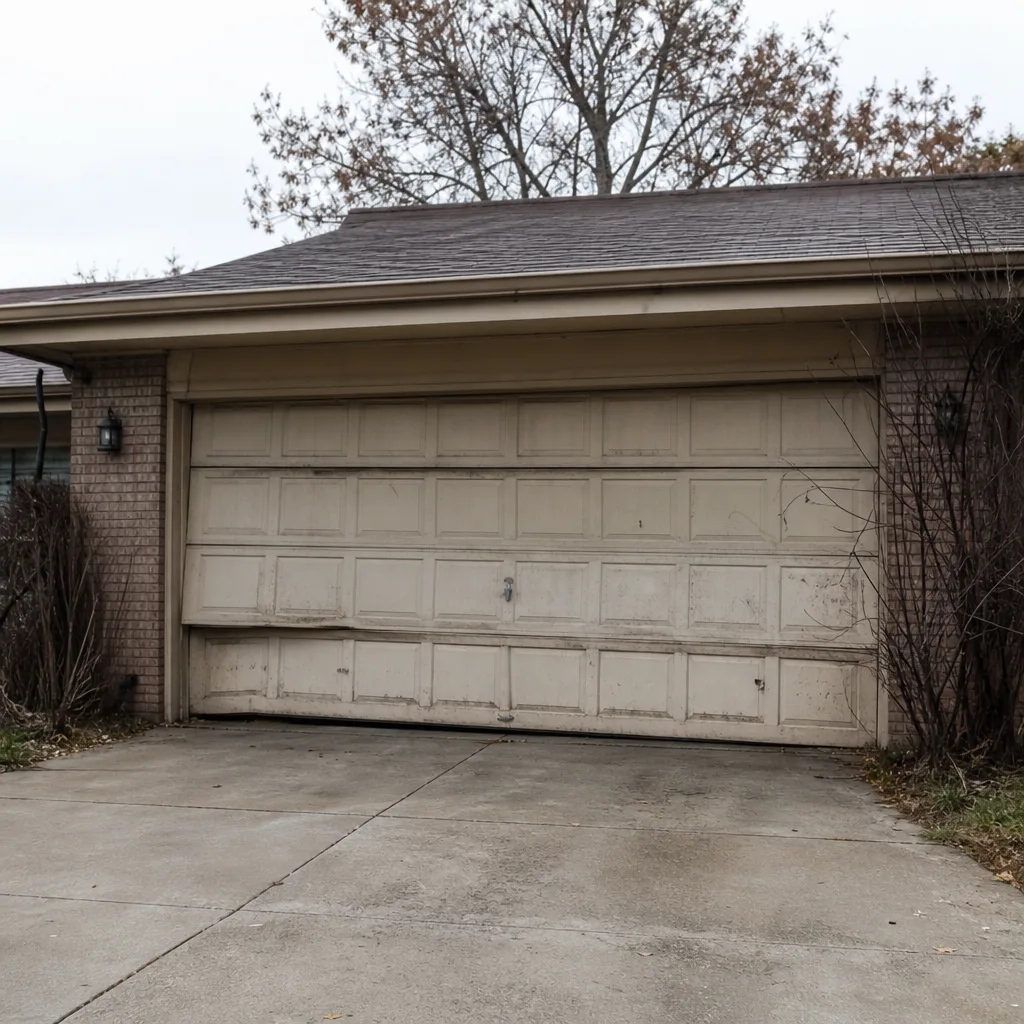 Before
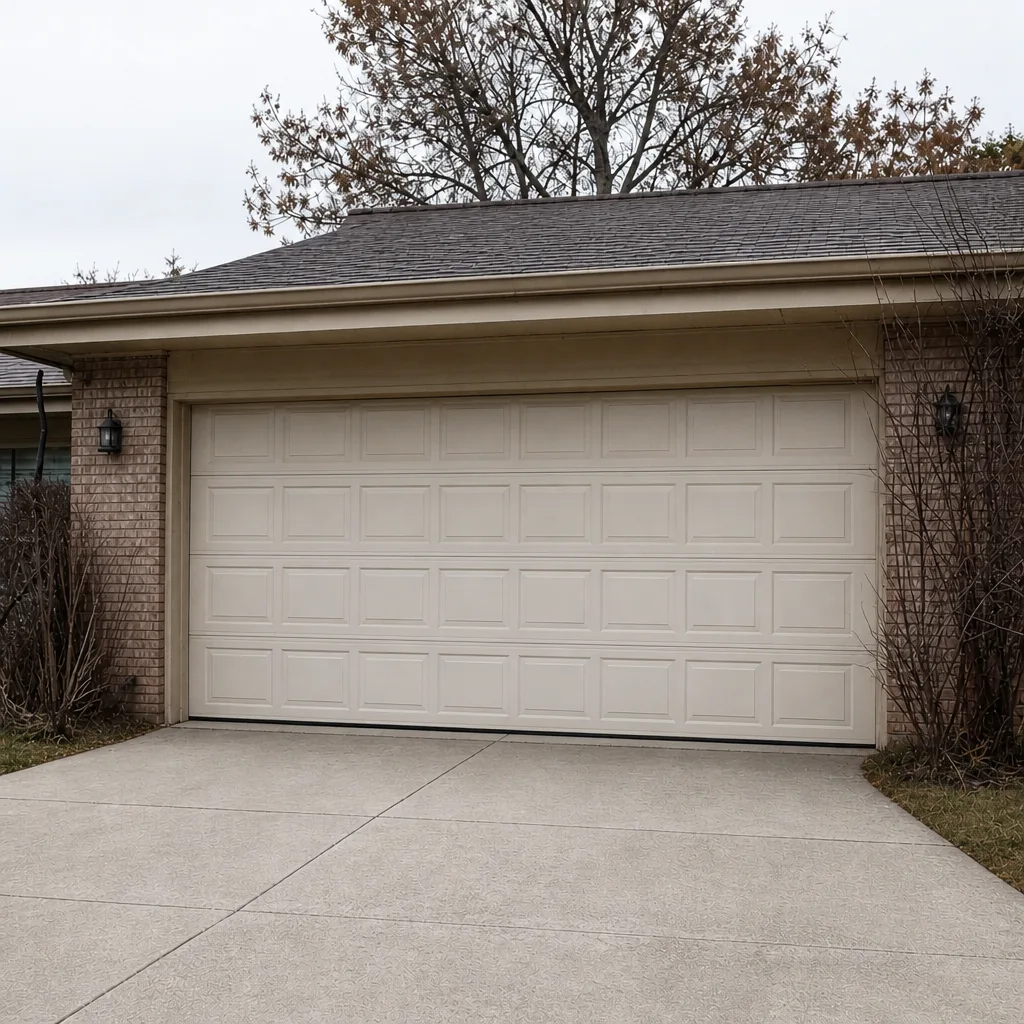 After
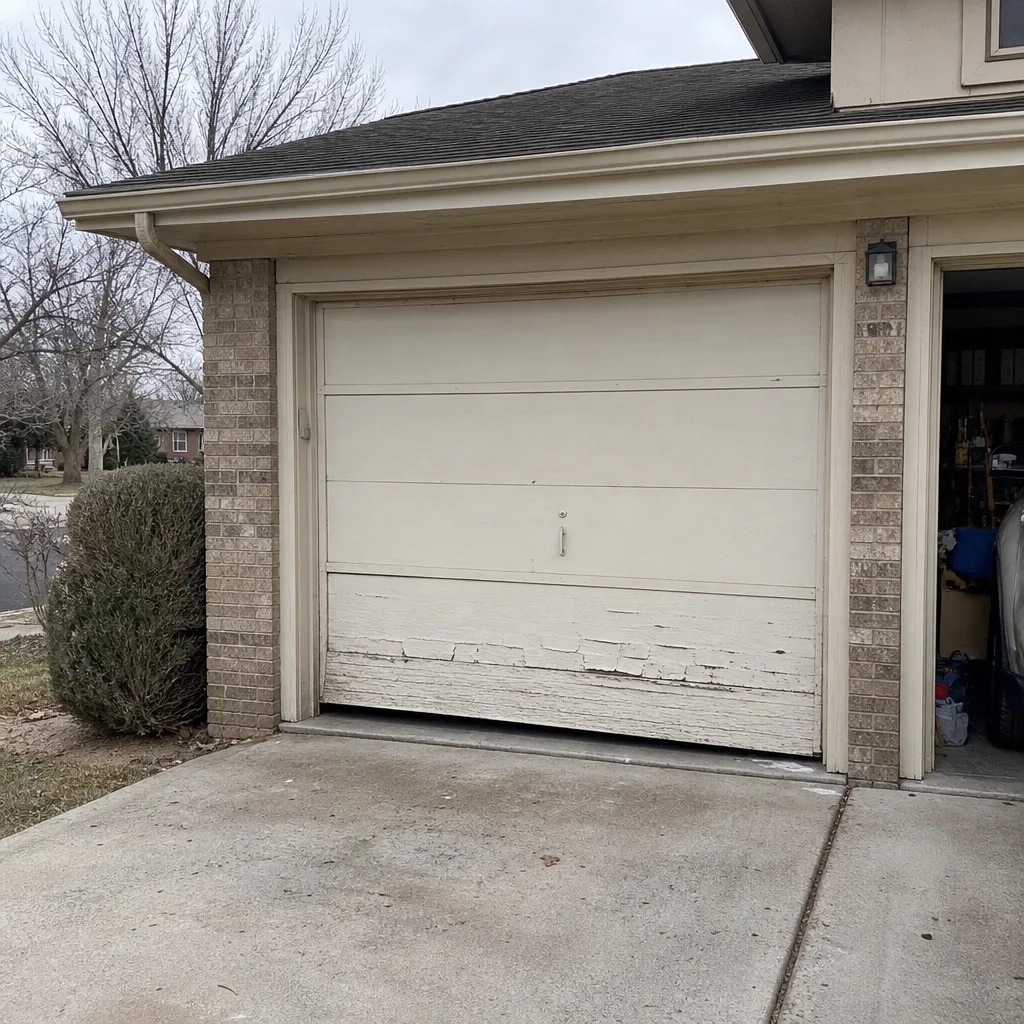 Before
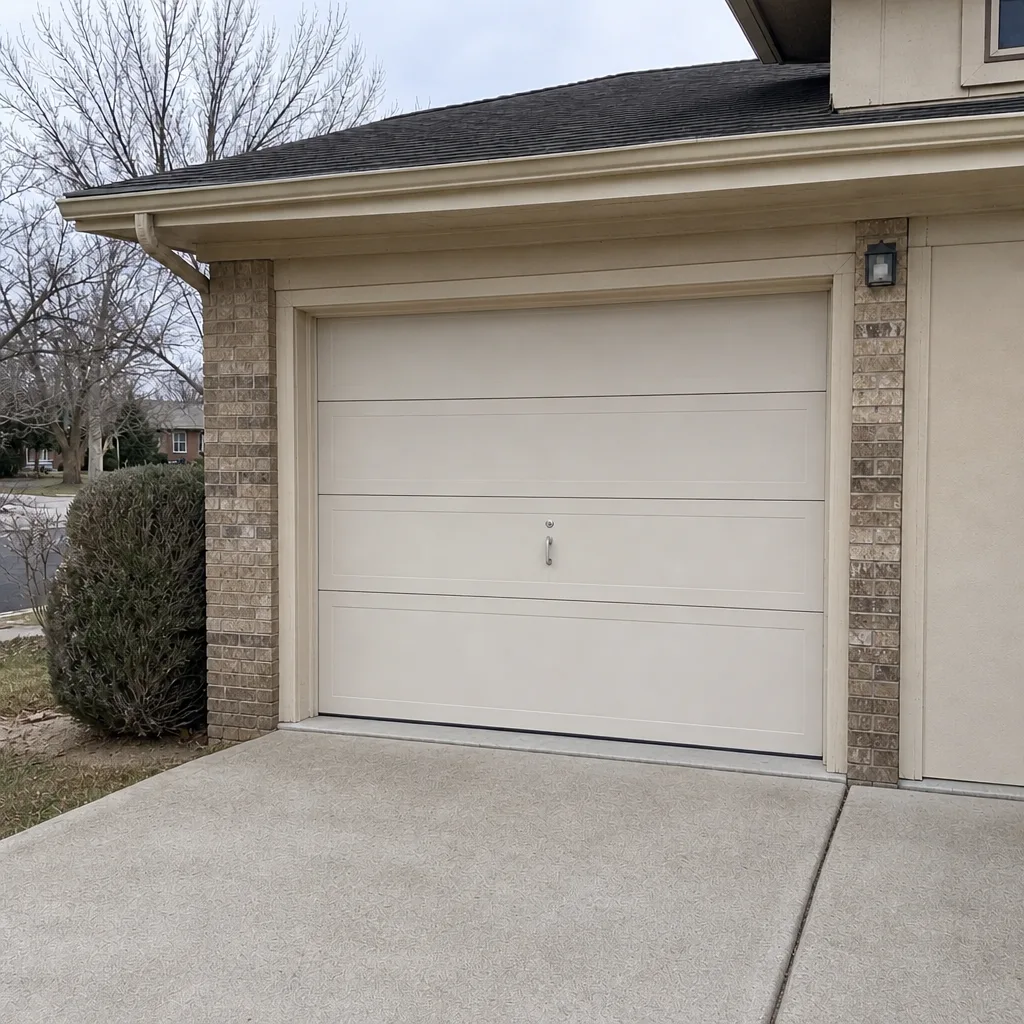 After
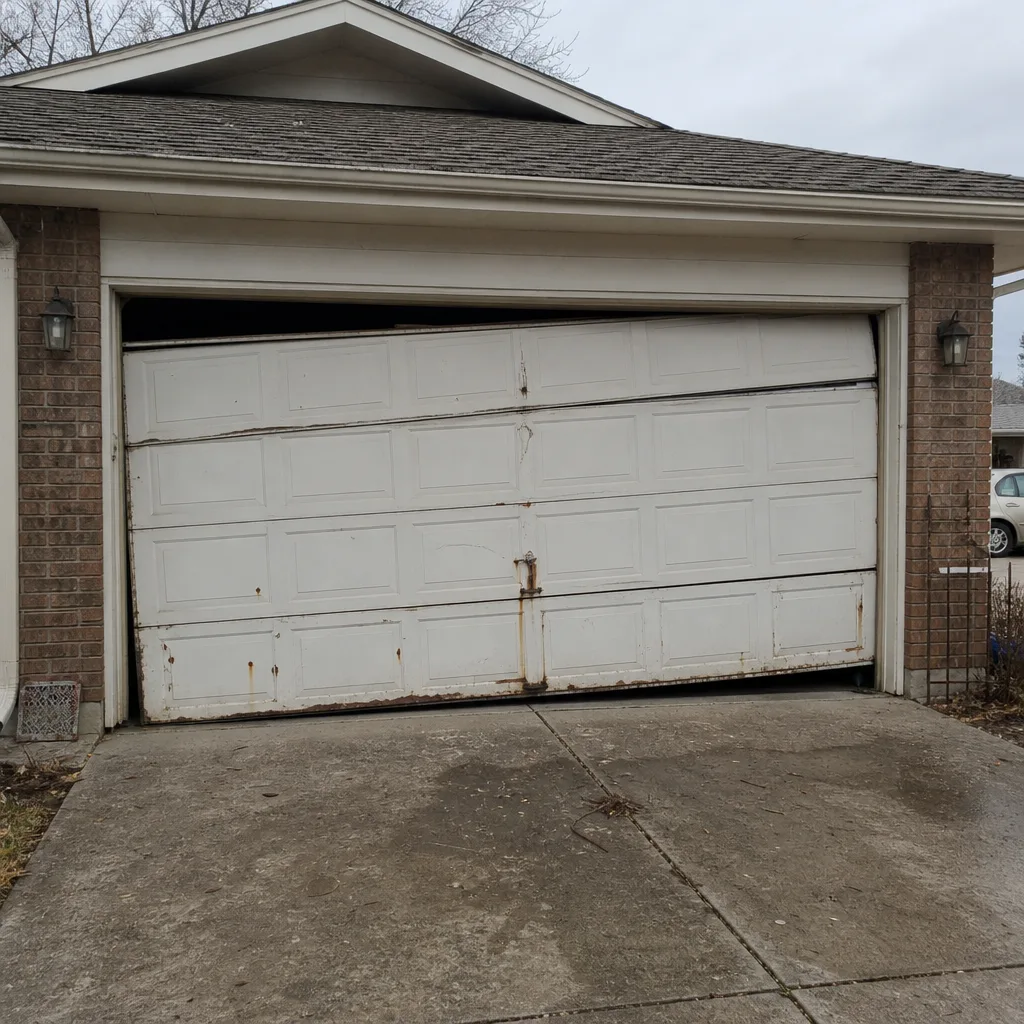 Before
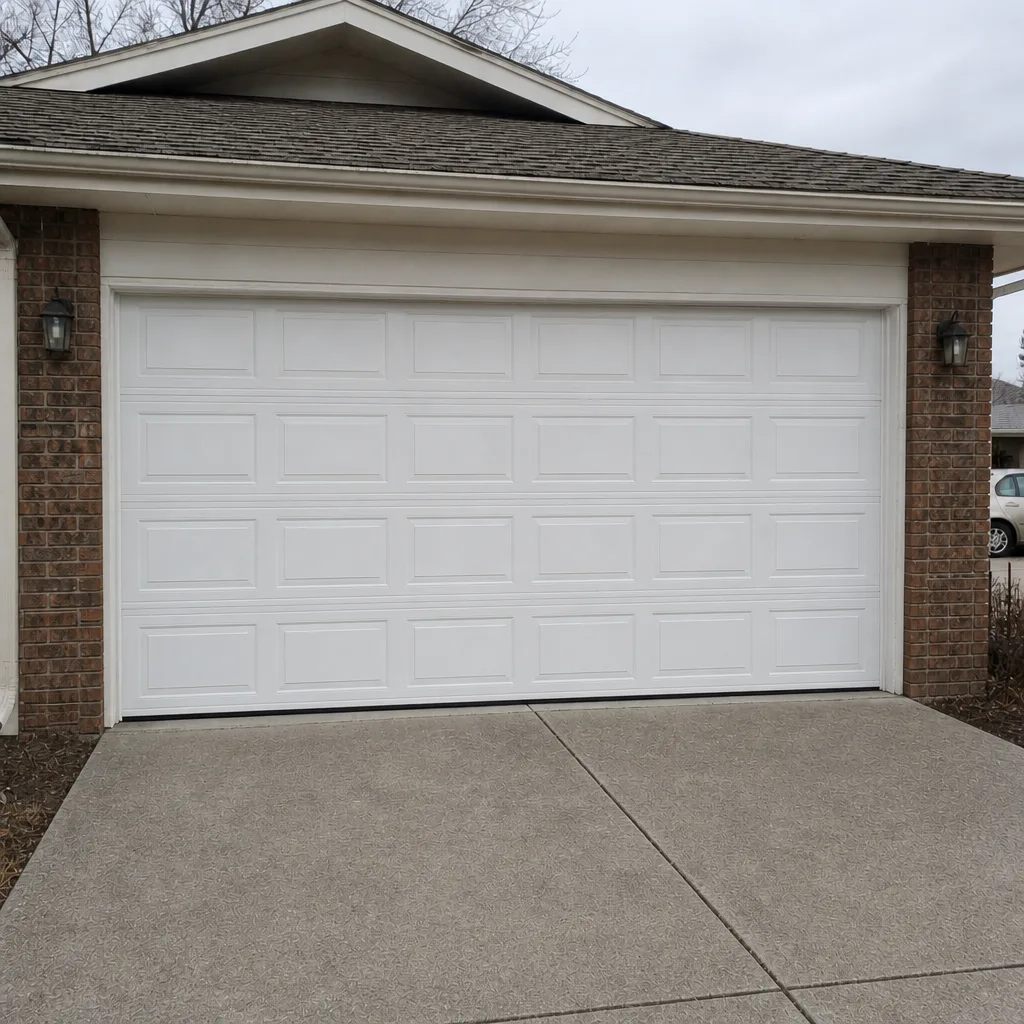 After
When to Call a Professional
Some garage door issues really are DIY-friendly – wiping down the tracks, replacing a light bulb in the opener, and testing the safety sensor. Everything else belongs with a specialist. Call a professional if the door won’t open or close, if it makes a loud snap or bang, if the spring is broken, if the door is visibly out of balance, if the opener runs but the door doesn’t move, if the safety sensor won’t stop the door, or if you see a frayed cable. Springs and cables carry enormous stored force and are not a safe DIY job. Opener circuit boards and motors are also worth leaving to a specialist, mainly because the wrong part or a bad program setting will shorten the door’s life. Garage Door Repair Heather Gardens offers free estimates in Heather Gardens – call (833) 958-8653.
Frequently Asked Questions
A single torsion spring replacement typically runs in the $180 to $340 range in the Heather Gardens market, depending on the wire size, cycle rating, and what the technician finds during inspection. Matched pairs usually replace together, so a pair comes in at roughly twice that. Cables and drums, if they’re replaced at the same time, are quoted as separate line items. Every estimate is written and agreed before work starts. Call (833) 958-8653 for a free estimate for your door.
Colorado doesn’t issue a statewide license specifically for garage door installation and repair, so legally any contractor can offer the service. That’s exactly why verification is on you. Check the contractor’s business registration with the Colorado Secretary of State, ask for proof of liability and workers’ comp insurance, and call your local building department about permits if the job involves a door replacement or track modification. The local professional we connect you with is licensed and insured as their state requires.
Ask them to name the exact part, the brand it’s designed for, and the source. A specialist can answer without checking the truck – they know what fits your door’s brand and opener. Chamberlain, Genie, Clopay, and Amarr parts aren’t interchangeable at the tolerance level, so a genuine OEM fit matters. Ask to see the part label when the work is done. If a contractor can’t tell you the part number, ask them to put in writing what they’re installing.
Cycle rating is the number of times the door opens and closes before the spring is expected to wear out. Standard-rated springs are rated for a household use rate, while heavy-duty springs are rated for doors that cycle more often. Doors in Heather Gardens are also subject to wide temperature swings, which work the spring harder than a stable-climate door would. A specialist sizes the cycle rating to your door’s weight and use, not to what’s convenient.
It shouldn’t. The written estimate you accept is the price for the work defined, and any additional discovery – a cracked end plate, a worn cable, a damaged track – should come back to you as a separate written adjustment before that work starts. There is no scenario where you should be invoiced more than the quote you agreed to without a chance to accept or decline. Call (833) 958-8653 for a free estimate.
It depends on three things: the condition of the door panels, the track and hardware, and whether the repair is a single component or the whole system. A 30-year-old single-car door with a solid panel and a solid track often benefits from a fresh spring and opener service. If the panels are damaged across multiple sections or the tracks are bent, a full replacement is usually the better spend. We can walk through the door in person and give you a free estimate for either path.
The Bottom Line
Hiring a garage door contractor in Heather Gardens comes down to asking better questions, not finding cheaper quotes. Verify the business is registered, ask the three technical questions about spring specification, OEM parts, and opener sizing, and insist on a written scope that names the spring wire size and cycle rating before you sign. Compare scopes, not totals. A specialist answers those questions in one sentence each; a generalist guesses. The difference shows up a year later when the door is quiet, balanced, and working. Have a garage door question now? Call us at (833) 958-8653 for a free estimate.
Written by the team at Garage Door Repair Heather Gardens.